
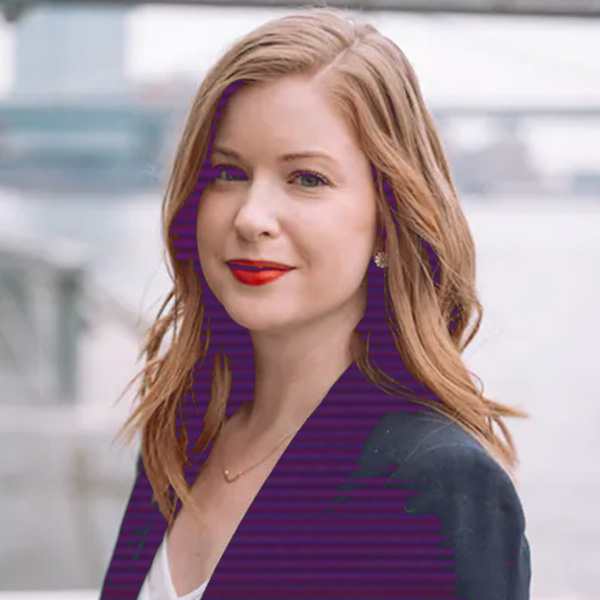
News Creator Corps Executive Director

Media executive, CEO & business journalist
Welcome to In Reality, the podcast about truth, disinformation, and the media with Eric Schurenberg—longtime journalist and media executive, now founder of the Alliance for Trust in Media.
When Eric started in journalism, the enforcer of accuracy was the newsroom. Editors questioned your work. Fact checkers combed through it for errors. The organization you worked for held you accountable for its reputation.
But as everyone knows, fewer people today get their news from this kind of institutional journalism. The growth in news consumption comes from so-called independent journalists—social media influencers, podcasters and Substackers, many of whom never set foot in a newsroom. In this media environment, people trust individuals more than organizations to tell them the truth.
Rather than resisting this trend, today’s guest is trying to shape it. Rachel Lobdell is the executive director of News Creator Corps, which trains creators in the disciplines that professional reporters learned in the newsroom: sourcing, fact checking, public records, transparency, and ethics.
This raises all kinds of questions for an institutionalist like Eric. Can news integrity be repotted outside the newsroom? Can creators maintain audience trust without pandering? And what happens to news gathering when journalists backed by newsrooms are replaced by individuals?
So, let’s ask News Creator Corps’ Rachel Lobdell.
Chapters
00:00 Introduction to Rachel Labdell and News Creator Corps
02:01 Rachel’s background in traditional journalism
03:30 What is News Creator Corps and its mission
04:48 Training creators with no journalism background
05:42 Impact of creator trust in underserved communities
07:34 Different types of creators and their roles
08:02 Why focus on creators without journalism training
09:25 The importance of mentorship and community
12:42 The NCC Collective and creator accreditation
13:59 Handling monetization and ethical standards
16:33 Dealing with sponsored content and disclosures
18:21 Guarding against sensationalism and algorithm influence
20:46 Sourcing and transparency in creator content
22:50 The future of creator-driven news ecosystems
27:34 Long-term vision for trustworthy information
28:30 Measuring impact and community engagement
Alliance for Trust in Media
alliancefortrust.com
Transcript
Eric Schurenberg (00:01.324)
Rachel Laudell, welcome to In Reality.
Rachel Lobdell (00:04.369)
Thank you so much for having me.
Eric Schurenberg (00:06.424)
Great to have you here. Now, you are the executive director of a new organization called News Creator Corps. And before we talk about what News Creator Corps does, let’s talk a little bit about you and your background. You come from traditional journalism, as do I. In fact, we both worked at the same organization at different times, Fortune Magazine. But just about you, what did you cover in that part of your career? And what was the line that led you to News Creator Core?
Rachel Lobdell (00:35.739)
Yeah, I have a very traditional news background. I spent almost twenty years in traditional newsrooms, first starting in
local newspapers and working my way to New York where I worked at places like the Wall Street Journal, Vice, Fortune Magazine, most recently USA Today. And I worked mostly in newsroom management on the digital side. So I did a lot of audience development work, digital innovation, and really looking at how we could grow our audiences, how we could serve new audiences, how we could try new things and
What I saw throughout my career was that the way that audiences were getting information was changing. The way that people get information today is so different than the way that they got information when I started my career. And so as I was really thinking about what I wanted to do next and looking at the information ecosystem realistically, instead of sort of like romanticizing a past that where people would like pick up a physical newspaper, I noticed and really saw how effective.
Creators were. I saw it in my own life, I saw it in the audience data, I saw it in the ecosystem. And when I thought about what I cared about, which is do people have the information they need to make the best decisions for themselves and their families? Investing in creators and making sure that they had the skills to give out accurate information felt like an undeniable way to have impact.
Eric Schurenberg (02:01.685)
Okay, good. So it’s a great segue to telling us about News Creator Core and what it does. Rachel Lobdell (02:07.408)
We invest in and support creators who do not have a background in journalism or communications, but have an audience that trusts them. So these are creators who might cover things like local politics or national news, or things like travel, food, parenting, sports, anywhere where they are giving out information, serving a community. We teach them fact-checking skills, so things like sourcing, public records, interviewing, reporting.
We run these fellowship programs. They’re training fellowships. Our trusted creator fellowship is eight weeks long. It’s paid. Our creators get a $5,000 stipend for participating in it. And they meet once a week virtually. They learn a new skill. They put that skill into practice in their work that week. And they are just in a shared community with each other. So they get to bounce ideas off of each other, learn from one another.
We talk about stories, how they can chase them down, or what data sources might be relevant for them, and really just help them in their journey to give out the best information they can.
Eric Schurenberg (03:18.411)
How many of these trusted creator cohorts have you gone through and s how many creators does that mean you’ve trained?
Rachel Lobdell (03:26.128)
We’ve completed two cohorts so far. Both of those cohorts had 20 people in them, so 48 creators have been trained, and though they are now a part of our national network, which we call the NCC Collective. We are currently running our first cohort just for creators who serve rural communities. That’s running this summer. And then by the end of this year, we will have completed four cohorts with a total of 70 creators.
Eric Schurenberg (03:51.694)
Okay. All right. So the observation that you had while you were audience director, innovation director at the places that you worked in traditional journalism is now accepted, undeniable wisdom. So one in five Americans, according to Pew gets their news from social media, and if you’re under thirty-five, it rises to one in three. The people in your cohorts have
Zero journalism training, which is kind of an interesting choice. So you know, you have this one gets this idea that here we are in a news ecosystem where most of the people, or a good chunk of the people, a a large minority of the news ecosystem is now dominated by people with no training. Kind of what’s it it seems like there’s something wrong with that picture. Why not?
train local journalism or national journalism on the professional level to develop the kind of trust that creators have. Why do you need to have a whole separate organization like News Creator?
Rachel Lobdell (05:05.244)
There are so many communities that are underserved by mainstream media, whether they haven’t been covered or whether they’ve been actively harmed, and there is a lack of trust that is inherent for a lot of news organizations. Whether that’s earned or unearned, or a combination
of the two, creators have the trust of the communities that they serve. So by investing in them, we are able to get.
Accurate information, whether that’s necessary health information, civic information, local news, to the people who need it. And they are more likely to be receptive of it, they’re more likely to trust it, they’re more likely to act on it. And so by investing in the people who already have the trust, we are able to really have impact in those communities.
Eric Schurenberg (05:58.068)
I think we should come back to the question of trust versus skill or capability. But but first let me get a picture about News Creator Core and place it in the existing ecosystem of journalistic organizations and and individual influencers. So some individual influencers, as you know, are former journalists who branched out on their own and started a substack or a podcast and you can name half a dozen Kara Swish or
Matt Iglesias, Megan Kelly, Glenn Kessler. Then there are also a rising number of influencers who work under the umbrella of a of a newsroom and have a symbiont relationship with a branded news organization, Sean Singh at Houston Chronicle or Adam Dahl at at Civic Lex. So where in this ecosystem is news creator core? Why
Why did you choose to work strictly with people who don’t have journalism training already?
Rachel Lobdell (07:00.942)
One of the hard things about working in the creator space is we use the word creator to mean so many different things. And so when I’m talking to people about the work that I do, it isn’t always immediately apparent who I’m talking about or what kind of work I’m talking about doing. So I put creators in a couple of different buckets. The first would be more of what we would refer to as influencers. These are the people who are giving you a roundup of dresses to wear on vacation.
Then you have
What I would call independent journalists. They’re often sometimes now being more referred to as creator journalists, but we really think of these folks as independent journalists because they have a journalism training, they often spent years working within a journalism institution, and now they’re just independent of that. And then the third bucket, which is the bucket we work in, which is where we would call news creators. These are people who spend most of their time giving out information.
And they do not have a background in journalists or comms. For a lot of them, they sort of fell into becoming a creator. I would say a good chunk of the creators we work with have an expertise in something else. So like meteorology or an OBGYN, a lawyer, things like that. And maybe they got online to start
dispelling rumors that they were hearing and bringing their expertise to the table. And for a lot of them, becoming a content creator as like a big part of their life or a big part of their job was not on their bingo card. They sort of fell into that, you know, they had a group of people who just started trusting them, turning to them for their analysis of the news. And then they were like, I have this responsibility to do this right. And that’s often where they
Rachel Lobdell (08:52.272)
have found our program, they wanna, they wanna get better at their work. And so it’s really, it’s really fascinating to work with people who care so deeply about their communities and really want this professional development on the reporting aspect of it.
Eric Schurenberg (09:08.567)
Hmm, hm. Yes, it’s it’s nice that they have that sense that they that there’s something that they need to use to burnish their abilities that are knowledge. Now, a lot of us in journalism got that knowledge from working on the job and working with editors or more experienced reporters and just imitating them or being mentored by them and starting at the bottom of the, you know.
the bottom rung of the ladder going to school board meetings and police blotters, places where, you know, a rookie mistake wouldn’t embarrass the organization. But it was a slow process and you learned a lot about culture and soft skills in the process. Can you reproduce that in the creator ecosystem?
Rachel Lobdell (10:06.47)
Like I was saying, most of them come to their creator work with some sort of other professional work with them. So that could be a wide it it could be a wide variety of experiences, but they’re not
Coming with no work experience, no experience sending emails or living in a professional environment. And so while there’s always new norms to pick up when you’re working in a different industry, I wouldn’t say that they are coming to this without anything behind them. I think that one of the things that the program really offers is that.
Mentorship, like you mentioned, that community, that learning from one another. Being a creator is a pretty solitary experience. Most of them are creating by themselves. and so even just having someone to bounce an idea off of, you know, in the way that we did in newsrooms. Is this crazy? I’ve been sort of thinking about this. Are you seeing the connection here? Can be really, really valuable. And that is one of the things that we really took away as we started learning from doing these cohorts is that
They wanted to stay in community with each other. They wanted a chance to ask each other questions, to use their resources. And then throughout the programs, they also have access to all of the NCC staff and trainers too. So we really try to reproduce as much of that knowledge sharing as we can.
Eric Schurenberg (11:39.172)
that is one of the main attractions, I would think, of the NCC collective, which is described in some of your material as a a coalition of accredited creators. A accredited I assume means that they’ve gone through the program. Is i is the expectation that accredited will distinguish those creators from others in future or in the marketplace for attention.
Rachel Lobdell (12:07.654)
So the only way to be in the NCC Collective is to complete one of our programs. You have to not only be accepted, but you have to complete and graduate from one of the programs.
Eric Schurenberg (12:19.799)
Okay.
Rachel Lobdell (12:19.812)
A lot of organizations tell me that one of the hardest things about working with a creator is knowing who to work with. The platforms don’t make it very easy to find creators. You know, you’re never quite sure what what their work ethic or or what their work product usually is. And I’ve been told that having this nationwide network of trained, accredited creators is like a cheat code.
to finding someone who you know cares about getting it right, who you know has gone through this training. And so that talent pipeline allows us to send revenue generating opportunities to the creators as well.
Eric Schurenberg (13:03.721)
the creator economy runs on forms of monetization that are unique to it, or at least that are surrounded by guardrails in traditional journalism. So brand deals and product placements and paid partnerships. in the ecosystem, not all of that is disclosed. There’s no
requirement necessarily by platforms or or other kind of potential sources of authority that those things be disclosed. So if you are a member of the collective, you’re a graduate of the News Creator Corps program, how does a creator handle the fact that they’re kind of constantly tempted by business models that are structurally intentional?
in in intention, sort of in opposition to independent journalism. and will kind of that that temptation just doesn’t go away. I guess it’s a question about like so how do you enforce the the standards and ethics that you have taught during the cohort programs?
Rachel Lobdell (14:19.44)
That tension is so real because not only do you have someone who is serving a community, they also have bills to pay. They need health insurance. They need all of the things that we all that we all need. And so living in a world in which the algorithms really
Incentivize you to do shock and awe, you know, even give out misinformation. it’s it can be really tough to live in the lane of truth. And so one of the things that we are working on at NCC with our partners at Project C and with Trusting News is a research program around the creator code of ethics. Part of our program is that we talk about having a code of ethics, we talk about the
need to give out a code of ethics to let your audience know what you’re going to be accountable for. And we don’t believe that those codes of ethics need to be the same thing. A creator doing local politics work, the way that they interact with a politician might be different than the way that a travel creator interacts with a politician. And so we’re not necessarily here to be the arbiter of what is right and what is wrong, but we do
Really encourage our creators to have something that they’re gonna stand by. And so part of this creator code of ethics project that we’re working on would create a framework where they could essentially build their own code of ethics of what they are going to stand by, and then they could give that to their audience, to partners, to sponsors, so that they knew what their own guardrails are.
Eric Schurenberg (16:08.423)
I can imagine a s let me give you a scenario, which I imagine happens all the time to certain kinds of influencers. Let’s say you are a health influencer and a supplement company offers you payment to speak kindly of a their particular product. Under the under the standards and the training that you’ve just discussed.
What is the influencer supposed to do?
Rachel Lobdell (16:43.505)
I wouldn’t say that there’s one right answer to that question, other than we anyone who participates in an NCC program signs a code of conduct that says that we will not knowingly give out misinformation. And so if you in your example, if you know that those supplements are not doing what they say that they’re going to do, you would not promote them. I think that while
A very large number might be very tempting. One of the things that we have noticed is that the people we work with are not going to be as tempted by that as I think everyone thinks that you would be, because they know that essentially what they sell is trust. And the moment they lose that trust with that audience, they they don’t really have, they don’t really have much. And so
that they’re not really willing to do anything that’s gonna put that at risk.
Eric Schurenberg (17:47.144)
Another temptation, quite apart from the monetization specifically that we’ve just kind of described, the sort of sponsored content undisclosed, is the algorithms themselves, and you refer to that. So in a traditional newsroom, just sort of as a baseline, your story gets published if the editors approve it and it reflects well on the organization that you work for. In the
influencer economy, really the what determines that is the algorithm. And as you said, there are the the f the factors of the algorithm are to drive people towards, I forget the phrase you used, but sort of outrage and fear and sort of all those base emotions, one of which is not journalistic integrity. Well how how do you advise
the the members of your cohorts to guard against that.
Rachel Lobdell (18:54.577)
The people who are in our cohorts are experts at their own community. They have built a very successful social presence or newsletter or Facebook page or whatever it might be. And so they know, they know their audience. They know what they need, they know what they’ll respond to. And we don’t try to pretend like we are the experts in all of their audiences because that’s what they’ve done really well.
up until this point. So we t we empathize with them. We know that you can put a lot of work into a piece of content and it goes out on the wrong day. You know, breaking news happens and it gets shoved to the bottom. we
help them diversify. So we talk a lot about why you should consider first party data. Here’s why you should have collect some email addresses and maybe have an occasional newsletter or why you should diversify the platforms that you’re on in case one suddenly goes away because you don’t own any of those spaces and you don’t own your audiences there. So we help them work around the broken system as much as we possibly can.
But at the end of the day, we can’t control the algorithms.
Eric Schurenberg (20:14.957)
All right. Well that is it certainly sounds like what you’ve just described is sort of good pris business practice if you’re an influencer, but as you noted, the kind of the the whole information ecosystem is at the mercy of machines, machine intelligence that is geared towards engagement. And that is that has a exerts a powerful gravitational pull towards the sensational and not towards the nuanced or the the truthful.
Th there’s another element about this direction that the information ecosystem has taken. And this is Rachel obviously not a problem that news creator core can solve or caused certainly, but commentators c I should I reverse that. Creators are primarily commentators or aggregators.
Some of your cohort may be people who go out and find original information, but more likely, like 95% of creators, they’re repackaging or interpreting reporting that another organization did, presumably at a traditional brand. What disclosure do you want to see there? That do you want to do you wanna make sure is that part of the statement of ethics that people should talk about where they got the news, where the original reporting came from?
Rachel Lobdell (21:41.51)
Absolutely. The first week of all of our training programs is around sourcing. Not only how you can find trustworthy sources, where can you go for the information that you want, but the importance of letting your audience know where you got that information. And so we we very much push.
Being open about your sourcing. And that is why one of the things that I think is so exciting about the creator space is a lot of different news sources or information sources flow through creators. It could be stuff from newsrooms, it could be stuff from independent journalists or government reports or data or a PTA, you know, press release. And
When a creator has the power to amplify that, it sort of lifts the tide of all of the boats for information sources. So investing in creators is also a way to invest in the information ecosystem as a whole. Now we very much believe that they should always be saying where they got that information. And that can be as simple as when you are green screening and you have an article on the back, make sure that there’s the logo.
of of what you are of what you’re quoting from or let them know what department you got the data from from your local government, something like that. But yes, absolutely they should be sourcing.
Eric Schurenberg (23:14.287)
this is a philosophical question, but obviously even with disclosure, the monetization comes to the influencer. So the the eyeball is on the place where the news is encountered rather than where the news is created. So kind of philosophically speaking, how do you feel about sort of the the end game of this? Again, to say to to point out that this is not
You didn’t cause this and and you’re living in a r the reality we have rather than another reality. But what does this lead eventually? When the last newsroom turns out the lights, where will creators get their material?
Rachel Lobdell (24:00.456)
There is a journalism versus creator debate happening and we in no way believe that creators are replacing journalists. I think that there is room for, there’s not only room for everyone at the table, there’s a need for everyone at the table. And we are all stronger when we work together.
I don’t love what’s happening in media. Obviously, this is what I’ve dedicated my life to, and I believe that newsrooms should be better resourced. they and the problem of how to monetize news is something that is, I think, deeply flawed and impacting our country in so many different ways. But this question of creators, you know, stealing.
Newsrooms works and getting credit for it or getting the monetization from it is not a new question. This has been happening, you know, for forever, whether it was picked up by radio or the ongoing saga of is ESPN gonna source where they actually got the story from. you know, we when I talked to folks, I said.
If Oprah picked up your story, would you be mad about it? No, we would be so excited that it was being talked about on CNN, on Oprah, on whatever it is. And this is just the modern version of that. And so I a hundred percent understand that it is so frustrating to work in a critical industry that is so underresourced, but the creators are not the problem.
Eric Schurenberg (25:41.194)
let’s talk about trust. The the trust that creators get is partly or largely, depending on the on the creator, parasocial. So people are attracted to people who look like them and share their politics or appealing in other ways. You mentioned before the creator who lives down the street and understands your neighborhood and or your community.
That is sort of a human trait. It’s a gut level judgment that people make. And I would say that in this environment, people have a hard time telling the difference between true integrity and charisma, or you know, similarity, or just overweening confidence. And they’re drawn to the stories that appeal to their prior beliefs. when I think about
The work that you’re doing with your cohort where you may be encouraging people to embrace nuance and to give credit to original sources and to avoid spectacular misinformation, no matter how appealing it would be. Are you setting the cohort up for a difficult time competing with the unbridled Wild West?
of social media the same way that traditional newsrooms have a problem.
Rachel Lobdell (27:16.455)
We don’t have ton of data because we’ve only completed two cohorts so far, but this was a question that we really thought about and were very curious about. A lot of times when you see an account become more news oriented, more political oriented, the audience may decrease. And the people who stick around are likely to be pretty engaged, but we were very
Nervous, frankly, about doing anything that might hurt the creator’s growth or their monetization or their revenue. And what we’ve heard so far is that they have not only not been negatively impacted, but they’ve been positively impacted. Either they have grown, and a lot of that can come from supporting one another, doing
work together for instance and then and then supporting one another or they have found new ways of doing things that are just as successful. So we had a creator tell us that after he completed the program he saw that he was doing fewer pieces of content but all of them were deeper and that his audience was unchanged. They liked the deeper content they didn’t mind waiting a day or two
to have something that was better reported, that was more nuanced. And so maybe it’s about changing into something that is either just as successful or more successful by doing things a little bit differently.
Eric Schurenberg (28:53.581)
So Rachel, paint a picture for me five years out, ten years out, what has News Creator Corps actually created? How has the ecosystem changed? Because you have now flooded the ecosystem with a bunch of journalistically trained influencers who would otherwise be kind of left out to to dry, at least in in in terms of journalistic skills go.
what is the you know, what’s the the long term vision?
Rachel Lobdell (29:29.393)
As my colleague Anne-Marie Dooling says, we want accurate information to be just as loud as misinformation. I think trying to combat misinformation is always going to be a losing battle where there’s so much manpower and ri money behind it that we’re never going to eliminate it completely. But we can create a
Army, if we’re sticking in this metaphor, of accurate truth tellers that speak to different audiences, that reach as many Americans as can possibly we can reach with accurate trustworthy information that hopefully that creates higher media literacy, it drowns out some of the misinformation, and just overall we have a healthier information ecosystem.
One of the things that I’m really looking forward to in the next like year, couple of years is data around impact. So our our local news desert data is a little bit incomplete. It doesn’t really, it doesn’t show when a community is underserved by a newsroom that is in the community. And it also doesn’t show when a community is being served by a creator.
and so we are having some really interesting conversations with potential research partners around how do we measure the creator’s impact on a geographic community or otherwise, or you know, can we show that c communities with a strong creator relationship have higher civic engagement? We anecdotally are told yes to all of these things. and so I’m really
Excited about some potential research that could come out in the next couple of years that really showcases how this works.
Eric Schurenberg (31:20.147)
Okay. Well I think we should leave it there. I like the idea of an army of trained influencers battling against the forces of misinformation. Who could argue with that? Rachel, it’s been a pleasure talking to you. Good luck and thank you for being on InReal.
Rachel Lobdell (31:37.287)
Thank you so much for having me.
Created & produced by: Podcast Partners / Published: Aug 6 2026
All episodes are streaming on these platforms:


